
NUGGET: NERDY, UNSOLICITED, GREAT GEAR ENDORSEMENT / TIP
The purpose of these “NUGGET” posts is to share some bits of climbing/mountaineering equipment that I feel are exceptionally good/functional/useful, with some explanation of why I think they are so good. My primary motivation is simple: to keep these exceptionally good products available. Sadly, the best, highest-performing products are often the ones that don’t sell well enough, and are discontinued within a year or two of going on the market. Sometimes that is because a product is simply very niche, and only relevant to a small group of people. However, I think that more often it is because it takes time for a significant number of people to catch on to how good some products are.
A second motivation is just that it is satisfying to provide people with helpful information. A third motivation is that when the piece of gear I’m endorsing happens to be made by one of my sponsors, that sponsor will hopefully appreciate my taking the time to promote that piece of gear. However, I ABSOLUTELY PROMISE to only write these NUGGET endorsements for gear that I honestly think is awesome. I have never endorsed a product that I don’t personally believe in (even though I’ve been asked many times to do so), and I never will. Honesty is too important to me, and it is too important to me to not erode my credibility. When one of these NUGGET endorsements is of a piece of gear made by one of my sponsors it is not coincidence, however – I am a gear nerd through and through, and I have sought out the sponsors that I have specifically because I want the best gear for my own climbing/mountaineering. Certainly, many of these NUGGET posts will be pieces of gear that are not made by any of my sponsors. The only aspect of these posts that will be affected by my sponsorships will be the omission of some NUGGET posts that I might otherwise make. For example, even if I thought that the Black Diamond Raven Ice Axe was really awesome (I definitely don’t – it’s just a random example of a piece of generic climbing gear), I nonetheless wouldn’t make a NUGGET post about it, because it is a product that directly competes with ice axes made by Petzl, one of my main sponsors.
Coming to the market this fall are the new “M10 Storm Pants” from Patagonia. I personally suspect that for alpine climbing these are the best hardshell pants that have ever been sold (they are certainly the best ones that I have ever seen), and since shell pants are one of the most critical pieces of clothing, I think that makes them quite special. It is rare that I think a specific item of clothing can make a real difference in a climbing scenario (generally it is more important which boots you have, which crampons you have, how sharp your picks are, etc), but in the case of these pants I really believe that they do. In addition to the fact that I really think they are exceptional, I am excited to vouch for these pants because it is a product that I have been very involved in creating.
While softshell pants are very appropriate for high-abrasion climbing (such as thrutching up a granite offwidth), I never use them for serious alpine climbing – hard shells are far lighter, far more waterproof, and far more windproof. For climbing on big, cold mountains, where the weather itself can often be fatal, softshell is simply not a prudent choice (unless combined with hard shell, which is a very heavy overall system). The main reason that so many alpine climbers still use softshell (in addition to its very valid use for high-abrasion climbing) is because, unlike hardshell, it is stretchy, and they appreciate the greater freedom of movement. That freedom of movement comes not only at the cost of weather protection, but also at an energy cost, as repeatedly stretching the fabric thousands of times over the course of a big alpine climb is a waste of energy. For many years I hemmed and hawed when packing for a climb, wondering if I should wear softshell pants with greater freedom of movement, or hardshell pants with superior weight and weather protection – occasionally I have even brought both. However, this tradeoff was only necessary because the overwhelming majority of hardshell clothing on the market is not well designed to optimize mobility. Over time it became increasingly clear to me that the real solution was simply a well-designed hardshell pant.
I truly am a gear nerd, and have been since I was 12 years old. I also have always been technically inclined – building and modifying things since I was a kid, and studying engineering for the first half of my university education. That passion for gear and design, combined with 30 years of very regular skiing, alpine climbing, and rock climbing, I genuinely think has resulted in me having quite good ideas for how to improve climbing and mountaineering equipment. However, my primary focus (at least for now) is my own climbing ambitions, so I don’t have the time and resources to make gear myself, and it is frustratingly rare for my feedback to be incorporated into my sponsors’ gear. There are of course valid reasons for this – among others, these companies have to make money to stay in business, and often the best gear isn’t the gear that sells best. Over time, however, my feedback has been slowly trusted more. I have regular R&D meetings with Petzl and Scarpa, and over the past several years, some specific modifications of Petzl and Scarpa gear have come directly from my feedback. The new “M10 Storm Pants,” however, are, to date, for sure the product on which I have had the most design influence. This process started over 5 years ago, when I sent the following email to a few people at Patagonia:
| Colin Haley Mon, Mar 25, 2019 at 4:13 PM Hey Guys, I’m not sure exactly who ought to be on this e-mail, but I think I’ve got roughly the right characters here… Real Alpine Houdini Pants: I think that in the last several years Patagonia has come out with a bunch of great products, but always for me the biggest void in the entire product line is a good shell pant for alpine climbing. The best Patagonia pants that I’ve personally used were the Knifeblade pants, but they sure are heavy for alpine climbing. So, as a result I end up wearing Houdini pants a lot, even in high mountains, but they’re certainly not ideal (snow gets in the snap-closure cuffs, the waist is kinda loose, the fit not great). I was psyched when I first heard about the “Alpine Houdini,” but in my opinion it was a flop – not breathable enough, fabric way too sticky, cut not good for climbing. The M10 pants had promise in terms of fabric and features, but the cut was no good for climbing. Anyways, I’ve been thinking a bunch lately about how I would personally design a good alpine climbing shell pant – one that could work for probably 80% of all my days in high mountains. A few years ago when Jenn Shelton and I did a skimo race together she asked Walker for some hardshell pants with side-zips, and voila they were made (which I still use decently often, including earlier today). So, I’m wondering if I could get a pair of simple, lightweight hardshell pants whipped up. The ideal scenario that I imagine is that a pair could be made within the next two or three weeks, I use them for a bunch of climbing to confirm that everything is correct, and then a couple other pairs could be made for me to use all summer long on expeditions. Even better would be to make a few more pairs so that other people who wear size M could try them as well, and hopefully give awesome feedback that eventually produce enough enthusiasm to turn them into a real Patagonia product! 🙂 Anyways, this e-mail is to ask if that’s a possibility. If so, then we can e-mail back and forth a few times to communicate design details as specifically as possible. I can at least say that these pants would be relatively simple in terms of construction and materials – the only zipper would be the fly, and there would be no buttons or snaps whatsoever. |
Luckily, that email was heard, and I was soon put in contact with Eric Noll, one of the designers in “The Forge,” which is basically Patagonia’s R&D department. Since the finished product is remarkably true to the original request, and since my original description to Eric explains quite well the whole concept behind the pant, I thought it would be fun to simply copy and paste my original email to Eric:
| Colin Haley | Tue, Mar 26, 2019 at 10:22 PM |
| To: Eric Noll | |
| Hey Eric, Awesome to hear that you have a bit of time to try this out, and even more awesome that you’re down to try to do it quickly! I totally understand that my ideal pant might not be featured or heavy-duty enough for general consumer use, but I do think the right fit (which is the key) would be applicable to either use. So, a fit could be dialed in, and then a heavier fabric and zippers and pockets and all those doo-dads could be added for the [misguided] public version. Anyways, I’ll answer the questions you posed directly below interspersed into your text: On Tue, Mar 26, 2019 at 6:52 PM Eric Noll wrote: Hi Colin I’ve got your notes from below. See my questions to start the conversation. Fit: Whats your ideal fit? Do you have any pants (doesn’t have to be Patagonia) that you find to fit you the best? Can you send photos/measure them at the waist, knee and hem opening? The goal is to make a simple, lightweight, hard-shell pant that doesn’t restrict movement at all. The usual “problem” to solve is high-stepping – almost all of our pants are limiting in this regard. Basically, if one leg is straight on the ground, and with the other leg you bring your knee as close as you can to your chest/shoulder, then your only limitation should be your own body’s lack of flexibility, not the pant. With many of our pants, by the time your knee is at 90-degrees (femur perpendicular to the ground), the fabric is already tight across your butt, and super tight on your quadracep, limiting your motion. Often, if you pull the pant fabric up on the leg that you will lift***, this helps somewhat, but obviously that shouldn’t be necessary. ***What if the front of each hip (hip-flexor area) and side of each hip (4 total places), had a piece of elastic sewn to the inside of the fabric, about 15cm tall, starting at the elasticized waist and going down? I think that this problem is partly due to the fact that many of our pants have been designed to conform to fashion standards. “Make them like jeans” is what I’ve heard people say. I would ideally like to throw fashion out the window completely for this experiment. For many of our existing pants I think the single change that would make the biggest difference would be to add a bunch of fabric in the butt and thighs (butt especially), even if that means the pants have a big, poofy, unfashionable excess of fabric in the butt when standing with legs straight. Similarly, if one leg is straight on the ground, and you lift your other leg straight out to your side (a version of the splits, essentially), it should be your own body’s lack of flexibility that limits the motion, not the pant. With many of our current pants, the fabric gets very tight on the outside of the hip (of the leg being raised) when the raised leg is not yet anywhere close to perpendicular with the ground. I think this problem can perhaps be aided partially by using a shorter “rise” (I think that’s the correct term – the distance from the pant’s crotch to the waist). However, I have worn women’s pants that have a really short rise, so I know that can be uncomfortable, especially on one’s genitals when hanging in a harness. I think there is potential to make something that has a somewhat shorter rise, but has an extra “pouch” of fabric in the middle of the crotch. This “pouch” would perhaps look ridiculous (I don’t care!), but I think it could potentially help a lot with being able to raise your leg out to the side (because the crotch material wouldn’t come under tension until much later in the movement), and could also help a lot with genital comfort when hanging in a harness (always an issue). I think that when in doubt, make it baggier. I think that almost all of our climbing pants would have a higher athletic performance if they were baggier. I’m wearing Cap-Thermal-Weight underneath, and based on those two tests (high step, side leg raise), I’ve just ranked the following pants (all size M) from best to worst: Galvanize Pant (new, current, version) Knifeblade Pant Houdini Pant Alpine Houdini Pant Refugative Pant M10 Pant It should be noted that in the case of the Galvanize and Knifeblade, they might be aided by stretch. Also, it’s certainly possible that the fit for the Alpine Houdini might actually be better than for the normal Houdini, but the fabric is so sticky on the inside that it doesn’t slide over under-layers. I think the ideal waist should be non-separating, and highly elastic. By “highly elastic” I mean that there should be a large range from un-stretched circumference to fully-stretched circumference (think of a pair of sweat pants). As Casey pointed out, all that elastic adds weight and is slow to dry, but I think it’s worth it. My actual waist at the moment is 82cm. I think that the max circumference (fully stretched) should be about 98cm (that is copied from Houdini / Alpine Houdini). I think that the minimum circumference (elastic not stretched at all) should be about 76cm (in other words, tighter on one’s waist than a Houdini is). You mentioned the alpine Houdini pant – what did you like about it for fit? The Alpine Houdini Pant is the closest existing product to what I want in terms of concept and features, but I don’t actually like it much (mostly because it is so sticky on the inside, and the breathability is so poor). The lower leg seems to have roughly the correct amount of bagginess, but the butt and thighs need more fabric, and I think it would benefit from my idea of a higher rise combined with “genitals pouch.” You mentioned the knifeblade pant – what did you like about it for fit? The Knifeblade Pant and Galvanized Pant I think have perhaps the best fits among products we’ve made, and I think that is largely because they have more material in the butt. I think the Knifeblade fit might actually be slightly better than the Galvanized, and the Galvanized won my tests only because it is stretchier (it cheated the test!). What climbing boots do you wear? Can you measure around them? I have all sorts of different boots that I use often. I think it is important for the cuff to be highly elastic, so that it can fit over a ski-touring boot, but be reasonably tight on a super low-profile climbing boot. However, there is no need for any zippers at the cuff, or drawcord, just a sewn cuff that is highly elasticized. I think the correct way to do this is like the “powder cuff” on ski pants (like Refugative or Descensionist) – it is elastic, and there is even a sticky-side of the elastic pressing against the boot, to help keep it stuck to the boot. I think that the maximum open circumference of the cuff (when the elastic is fully stretched) should be about 46cm. The minimum circumference of the cuff (when the elastic is not stretched at all) should ideally be something like 20cm, if it is possible to attain a range that large. If that is not possible, then the minimum cuff circumference should simply be as small as it realistically can be. I think that having the little tab of webbing on either side of the cuff (in case someone wants to tie on elastic for deep snow) is worth the weight. Fabric:Hard shell was mentioned below. Can you be more specific? Yes, hard shell – something with a membrane. The most important criteria are (in descending order of importance): 1) low-friction against under-layers 2) lightweight 3) wind and waterproofness 4) breathability 5) durability I really want to emphasize that the most important criteria is that fabric slides easily over whatever layers are worn underneath. The fabric in the “Refugative” pant is really good in this regard (and the Houdini fabric is even better, but obviously no membrane), and I think that would be a fine fabric to use. Obviously the Refugative pants are way too heavy, but I think that is mostly due to all the features, and I think this pant made from that fabric would come out plenty light. Stretch? Waterproof? Lightweight I think that with the perfect fit no stretch should be necessary, and that would be the ideal. Perhaps stretch is a decent way to hedge our bets, and to make things work well enough when the fit isn’t just right. However, I suspect that many of the stretchy fabrics are heavier, and don’t slide as well over underlayers. What will you be wearing under them? Most commonly I will be wearing under them a baselayer of Cap4/Cap thermal-weight/R0.5/Piton, which are all roughly the same thickness. Sometimes I will be wearing just Cap2 underneath, and sometimes nothing other than Cap2 boxer-briefs. However, sometimes I might wear something as thick as NanoAir pants underneath, so that is the important under-layer to consider. They will always work well with less-thick insulation underneath. So, basically, they should be designed to move well with NanoAir underneath, and anything thinner will work only better. You mentioned single fly zip (noted) Yes, a zippered fly is worthwhile, but a separating fly is not necessary. So, if the zipper starts just below the elastic waistband (probably it is something like 3cm wide), I think the correct length of the zipper would be about 7cm. It doesn’t need two sliders, one is enough, and it should close when pulling the slider up (so that the slider is at the top when the zipper is closed). It should NOT have a zipper flap at all. If no zipper flap necessitates a waterproof zipper then that is fine (but ideally one of minimal stiffness if so, and perhaps a waterproof zipper isn’t necessary), but it definitely should not have a zipper flap. Any pockets? No pockets whatsoever. I only appreciate chest pockets! If you could elaborate on all of the above. I’ll take that, read over and send back my thoughts and then lets jump on a call. Two weeks is a tight turnaround, but lets try and make it happen! OK, I hope you make some sense of all that. I’ll be curious to hear your thoughts in return, and of course a call sounds wise. I’m currently in France, so for a call the best for me would be Whatsapp/Skype/GoogleHangouts/FB Messenger. Just let me know which of those is best for you. Psyched! Colin | |
After a bit more back and forth about details and measurements, Eric got back to me with this text and photos:
| Eric Noll | Thu, Apr 4, 2019 at 6:47 PM |
| To: colinhaley | |
| Hi Colin, Pretty stoked on how the first few iterations are shaping up here in the forge. Big thing we are addressing is fit. I’m currently working in a non stretch muslin fabric to really dial in how the garment wraps around the body to maximize the upward lift of the knee. On my 3rd pattern now, really dialing in the fit. A new 4 point gusset allows for full range of motion up and out (think jui jitsu pants). volume in the butt to allow for less pulling when sitting in the harness. An articulated leg to allow for excess fabric to accumulate over the knee to help with the upward lift. I hybridize the rise making it lower in the front to increase mobility, while at the same time adding 2 seams to cup (shape) around the balls for added comfort / space. A pitched Waist Band (think angle up in the back and down in the front allows for more volume in the seat. | |

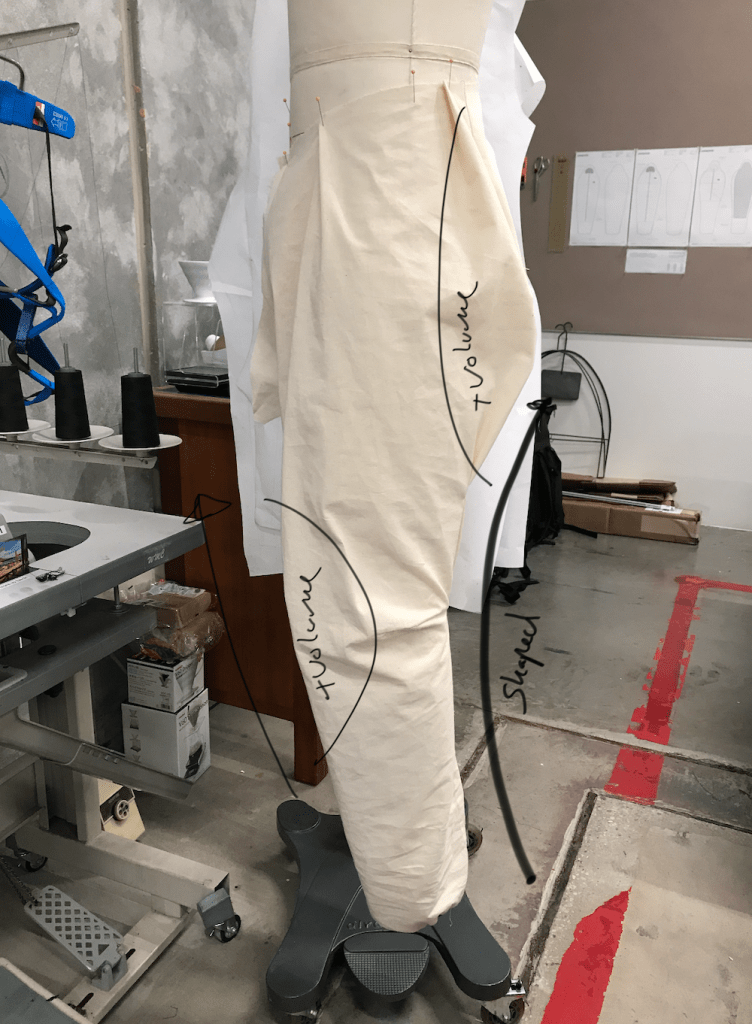

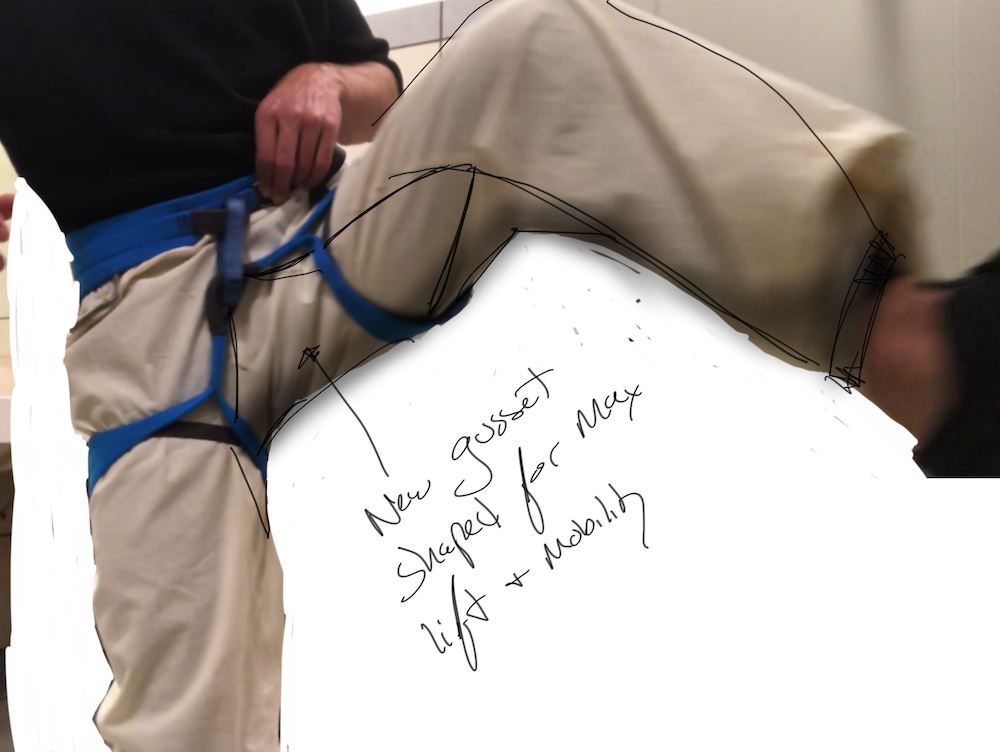
To which, a shortened version of my reply was as follows:
| Colin Haley | Thu, Apr 4, 2019 at 7:01 PM |
| To: Eric Noll | |
| Hey Eric, You caught me at a good time! Cool, this looks very promising! Nice artistry, also! I like that you mention jiu jitsu, as that is exactly the right idea – a hard-shell pant that one could wear for martial arts! | |
Only about 3 weeks after my initial email, Eric shipped me the first prototypes. In my initial feedback email, you might be able to pick up on the fact that I was enthusiastic about them!:
| Colin Haley | Sun, Apr 14, 2019 at 10:23 PM |
| To: Eric Noll | |
| Hey Eric (and others in CC), I got the FedEx a couple days ago, and have had a couple initial days trying out the RAHP – Yesterday multipitch trad mixed climbing (including taking an exciting whipper and ripping gear!), and today some sport climbing (not that I needed Gore-tex at the sport crag). First off, these things are absolutely fucking awesome! Even this first round is, without any doubt, the best pair of shell pants I’ve ever worn, by a large margin. When doing my two tests (high-stepping, and side leg raise) they are far better than any Patagonia pant I’ve ever worn. Plus, they are full-on weather protection in a properly lightweight package. I feel more confident than ever that these pants (if they don’t get ruined on the way to becoming a commercial product) are what I would wear on 90% of my days in the high mountains. There is no doubt that they are not very fashionable, but I definitely don’t care, and I think that is key to the fact that they work well. First off, the details… FEATURE DETAILS 1) Fly The diagonal fly seems great. It’s the right length, and the right height (relative to the waistband). Having no flap makes it way easier to access the zipper, and I think the zipper choice is perfect (not a waterproof zipper, but that hidden kind). Nothing to change. 2) Waist The max-stretched circumference seems perfect, and the amount of tension seems perfect. I think the grip elastic seems really nice as well. Nothing to change. 3) Bottom cuffs I can fit them over my Alien RS in ski mode and walk mode (when the boots are in walk mode, the cuff is bigger than when they are in ski mode), but it’s definitely a bit of effort to get them over the boots, in walk mode especially. With a bigger boot, like my Maestrale, they aren’t big enough. I’m a bit conflicted as to whether the cuff circumference should be made 15% larger (to accommodate more ski boots), or kept as it is. I might have to ponder that longer. The grip elastic seems really good. 4) Elastic cord attachment points The webbing used here seems pretty lightweight, and I suspect it might wear out when the rest of the pants still have life in them. I think that using a slighly more durable webbing would probably be worth the weight. They way that you sewed them so as to not need to tie a bowline is clever, but I think that just a simple piece of webbing that the consumer ties their own cord onto is better for two reasons:-The system you have sewn requires elastic cord of a certain diameter, but if it’s just to be tied on with a bowline, then people can use whatever diameter of cord that they like. The system that you have sewn on puts the force on the stitches in a way that I think might make them eventually fail. So, in conclusion, I think the elastic cord attachment points would be better off just like the ones on other Patagonia pants. By the way, I haven’t actually used this feature yet, as the cord you included is too short to get under my boots (combined with the pants being short – see later). 5) Fabric I don’t remember exactly what you called this fabric (Gore-tex Active Shell?), but to me it seems great. It slides well (the most important part!), it seems to breath well, and it seems like great weather protection. Frankly, I don’t think there is any need to sew any pairs from Houdini fabric or Stormracer fabric. These are already incredibly light for what they do (thanks to no superfluous features!), and I think they are perfect with the current fabric choice. And now to the important part… FIT The fit is definitely what makes these the best shell pants I’ve ever worn. I think the way you have designed the waist and crotch is super good. Not only is leg mobility for things like the splits super good, but I think they do indeed feel more comfortable when hanging in a harness than most pants do (less crushing of one’s balls) They definitely are baggy on me, but I really see very little downside of that. I think the difference in weight between a baggy pant and a trim pant is nearly negligible. At least for now, I’d be very hesitant to trim them down, as I think there’s significant risk of reducing mobility, and I see very little benefit to trimming them down. Also, I haven’t yet used them with properly thick insulation underneath (so far I’ve used them one day with Piton Bottoms underneath, and one day with Cap 2 underneath). The only change to the fit that I think needs to be made is the length. When I am just standing the length is right, but when I am wearing a harness (which often pulls your pants up a bit), and with my knee deeply bent, then they are definitely too short. I think the length should be increased by a full 8cm. I’m not 100% sure of this last comment, but: I think the length of the lower-leg could simply be increased by 8cm without modifying the rest of the pattern at all (so, in other words, the length of the lower leg is increased, but the length of the femur is kept constant). PHOTOS I’ve attached a bunch of photos (one from yesterday’s mixed climbing, one from the crag today, and some from inside my apartment just now), simply because that’s often more useful than words. I apologize for the weird/creepy set of topless photos, but I thought it would be best if you can see the waist of the pants. SUMMARY To summarize this long e-mail: These things are amazing; the best pants I’ve ever used. Please sew a pair that is 8cm longer (or better yet, a few, and give them to other people to try*), and please resist any temptation to make them less baggy! 🙂 *I feel conflicted, because I want other people to try them and like them, but I’m paranoid that other people will say to trim them down, and that it might ruin them! Awesome work! I’m very psyched on these! -Colin P.S. Please save the pattern you’ve made on a spare hard drive or something! If nothing comes of these (or if they get ruined further down the pipeline), I’ll get some factory in Thailand to sew 50 of them and be set for life! 🙂 | |


Over the course of the next few prototypes, Eric and I incrementally improved the fit with some minor changes here and there. In large part it was a game of “more cowbell,” in which I kept asking for a baggier fit in various areas, because every time that I received a new pair to test it was slightly baggier than the previous pair, and I liked them even more! I think that the fit was already nearly perfected by late 2019, and I used them a lot during the 2019-2020 Patagonia season. Shortly afterwards, during the first COVID lockdown in France, I wrote this article, in which I already had this to say about the prototypes:
“I find most hard-shell pants disappointing since they are often much heavier than necessary, and usually do not have very good freedom of movement. This is usually partly because of unnecessary features (such as full side-zips, which add a lot of weight, bulk and stiffness), and mostly because the cut of the pants is not optimized for range of motion. Over a year ago, I started a lengthy one-on-one process with Patagonia designer Eric Noll to make a better pair of hard-shell pants for climbing. We spent a lot of time discussing the design options and tried a few different prototypes. The result is far and away the best hard-shell pants I have ever worn. They are very feature-minimal (basically just a fly, elasticized cuffs, elasticized waist, and nothing else), but the real advantages are in the cut. Eric used jiu jitsu pants as his inspiration for designing a cut that would have the least possible resistance to high-stepping and stemming. One very important aspect of making a good cut in hard-shell pants is throwing fashion out the window. Another Patagonia tester already noted of these prototypes, “I find the butt to be very baggy and as a result dumpy feeling, not the most attractive pant.” The excess of fabric in the butt might not conform to fashion but is critical to being able to high-step without any restriction. To my delight, it seems that these prototypes are on their way to becoming a real Patagonia product soon, and so far, it seems that journey has not burdened them with extraneous features or eroded the excellent fit.”
Undoubtedly the COVID pandemic was largely responsible, but in the end it has taken 5 years for these pants to become commercially available, even though they were already nearly perfect in late 2019. I am very happy to see them become commercially available at all, because I have seen many good prototypes that never make it that far. For sure it helped that a number of other Patagonia testers, such as Josh Wharton, Kelly Cordes, and Jon Bracey, were all very enthusiastic about them from the very beginning. There was actually already an initial attempt to commercialize these pants a few years ago – the basic premise of the pattern was incorporated into the Dual Aspect Pant. However, people concerned with fashion made them much less baggy, which significantly reduced the mobility, the very simple cuffs were replaced with bulky, heavy cuffs, and the simple elastic waist was replaced with a bib (which I always find to be too much hassle). The result was a pant which, while already better than the vast majority of hard shell pants on the market, was nothing in comparison to the original “RAHP” (Real Alpine Houdini Pant).
Thankfully (mostly thanks to Kelly Cordes!), enough internal enthusiasm at Patagonia resulted in the resurrection of the RAHP, and it is finally coming to market with the name “M10 Storm Pants.” Compared to my best prototypes, there are only 2 significant differences:
- The cuff circumference has been increased. This is a trade-off, that makes the cuff easier to get over ski touring boots, but makes a less tight seal around climbing boots.
- A single pocket has been added to the right thigh. Probably many people will appreciate this, and I can accept the very minor increase in weight and bulk.
As I said earlier, I think it is really rare that clothing choice makes a big difference in climbing performance. To a young, dedicated dirtbag with little money, I would usually advise him/her to spend money on the best possible footwear, crampons, axes, cams, ropes, etc, and just use whatever clothing they can get their hands on cheaply. The M10 Storm Pants are truly an exception, and I think that even for a nearly-broke 20-year-old they are worth it. I think that almost anyone who does a side-by-side test between these pants and any other hardshell pant will quickly realize and appreciate the difference.
I intentionally didn’t publish this post until I first had a chance to order myself a supply to last for years and years, blowing the entirety of my annual clothing budget! Speaking of how long a pair of M10 Storm Pants will last: When a lightweight hardshell pant is combined with sharp crampons, you will inevitably get some rips. Good repair tape generally can solve these rips quickly and easily, and the best I know of is Wigluv from SIGA (https://www.siga.swiss/global_en/products/wigluv). In the last few years Patagonia have made a big effort to transition away from fluorinated DWR treatments to less toxic options, and the M10 Storm Pants use a silicone DWR. An unintended consequence of the silicone DWR is that repair tape does not stick as well to the fabric – Perhaps someone out there knows of tape even stickier, or perhaps it will be best to put repair tape on the inside of the fabric, and perhaps it will stick better there.
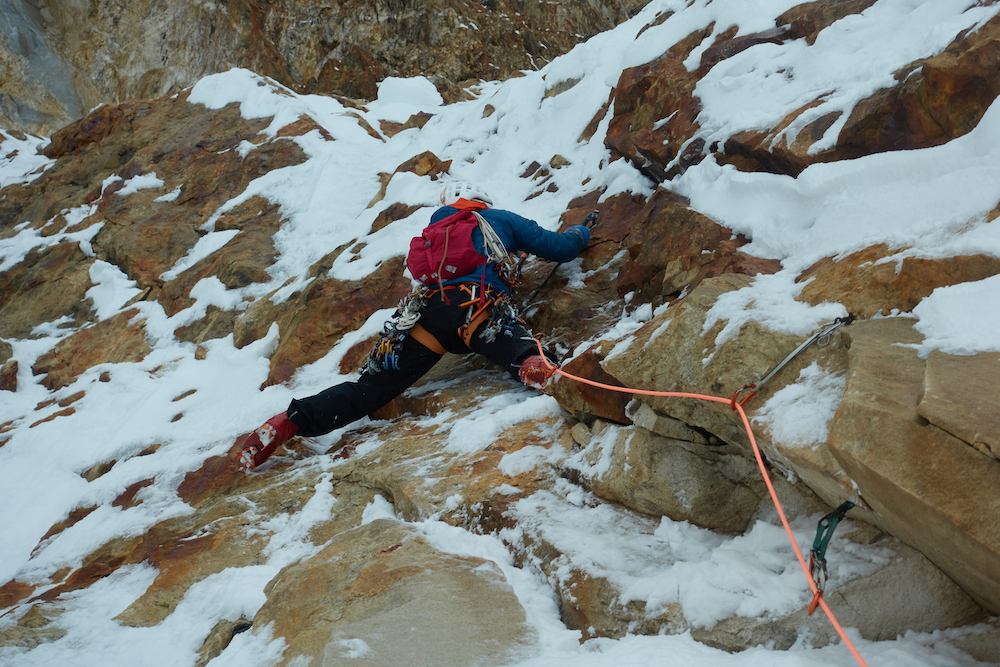
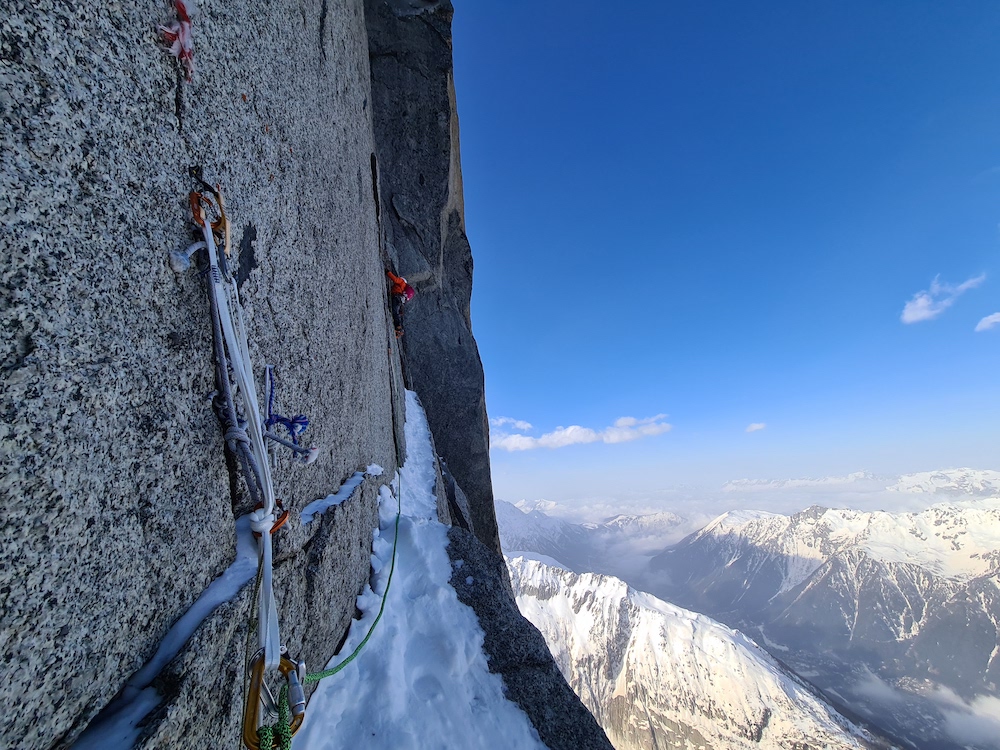
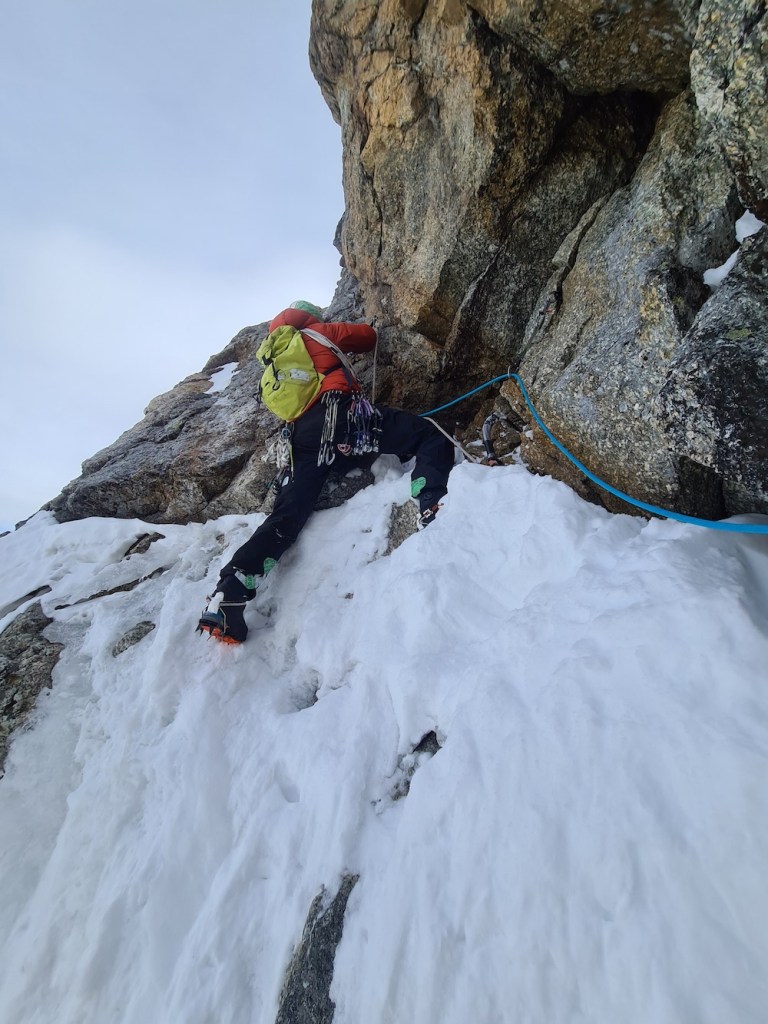
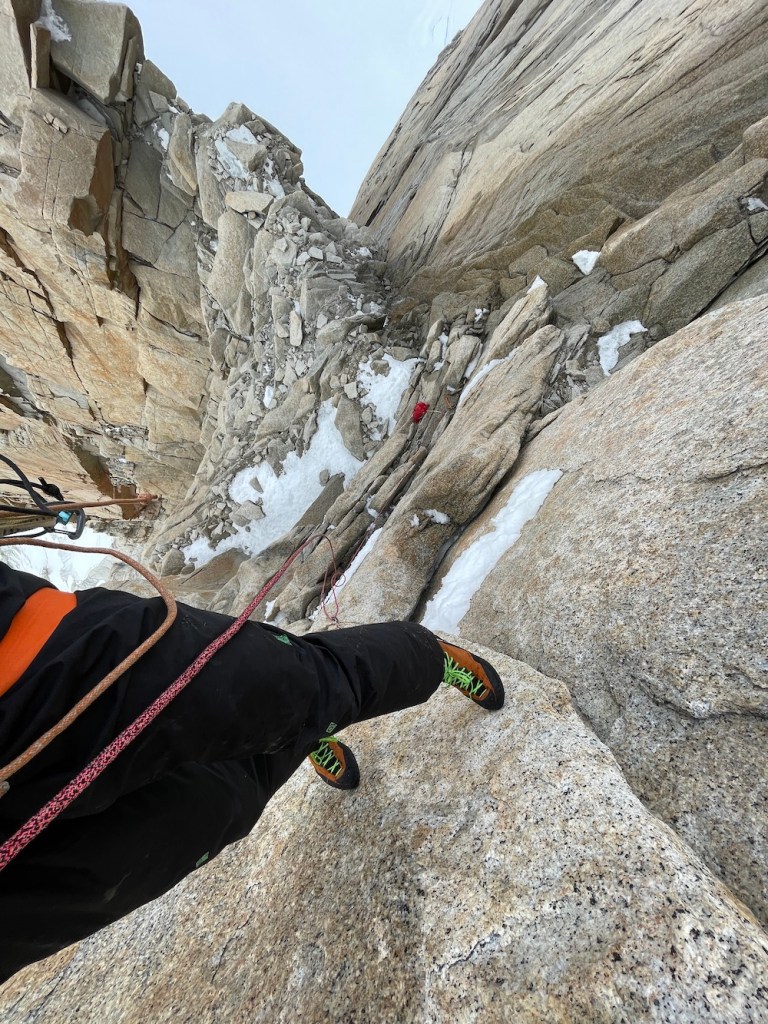
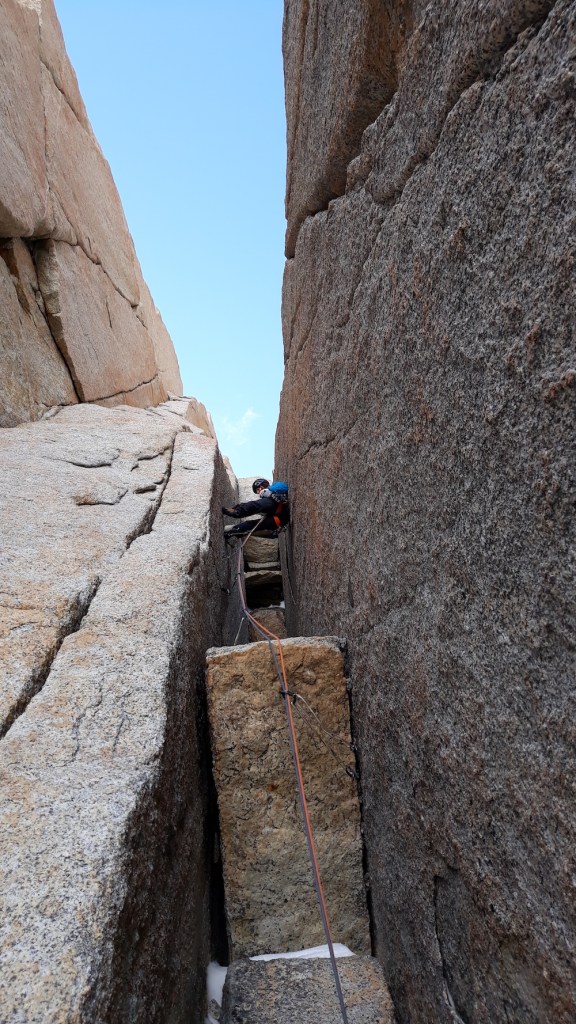
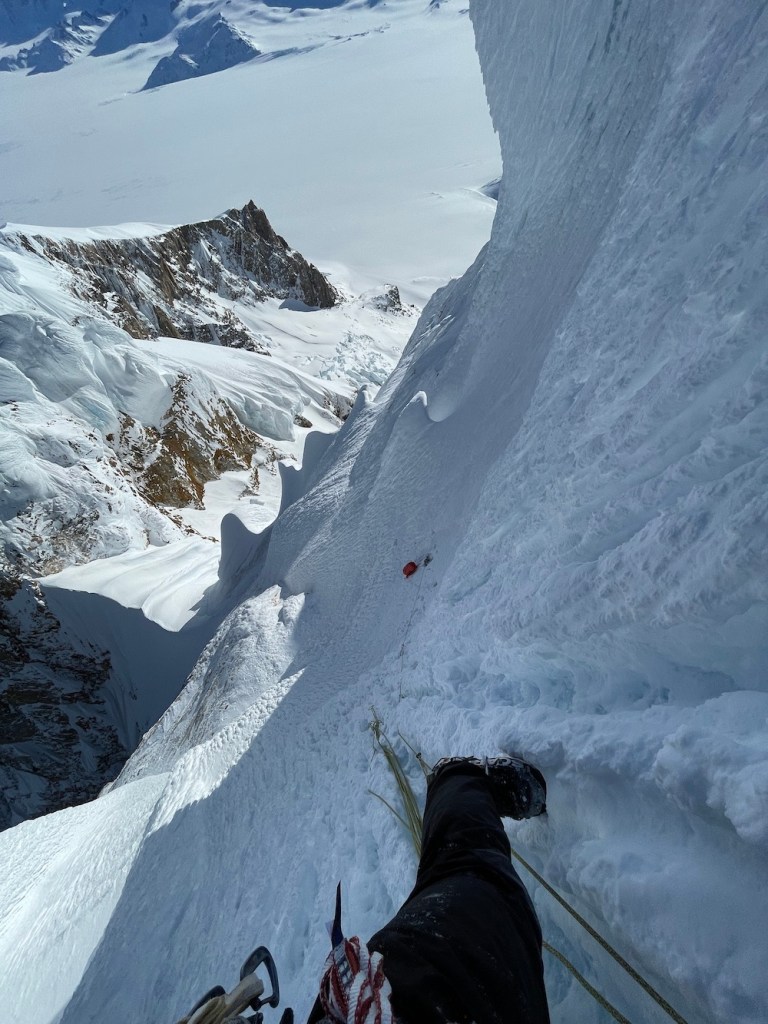
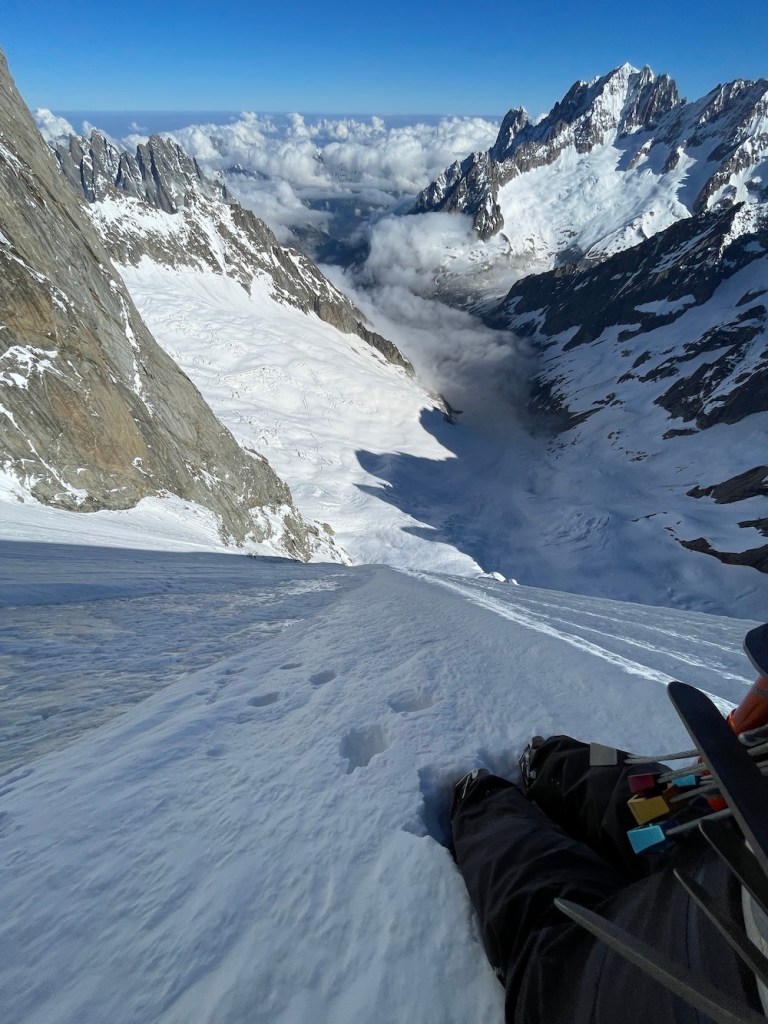
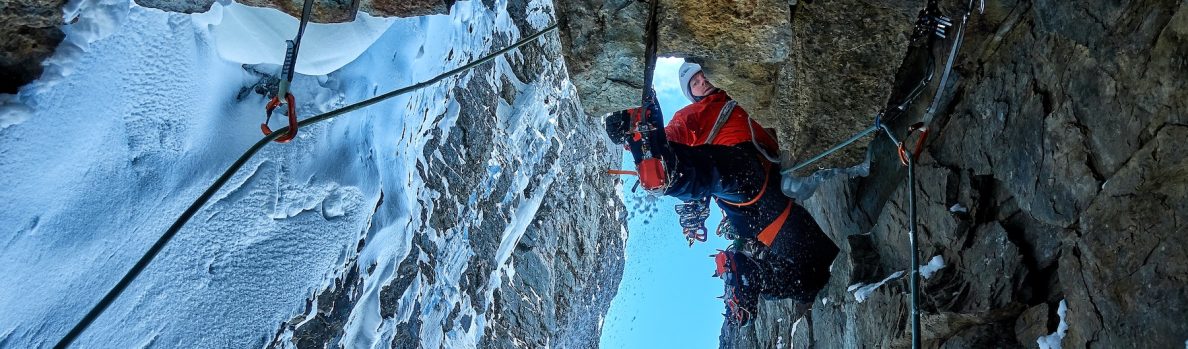
During the past 5 years the “Real Alpine Houdini Pants” are the shell pants I have worn for all of my alpine climbing endeavors. So, here is a random selection of photos of them in action!